

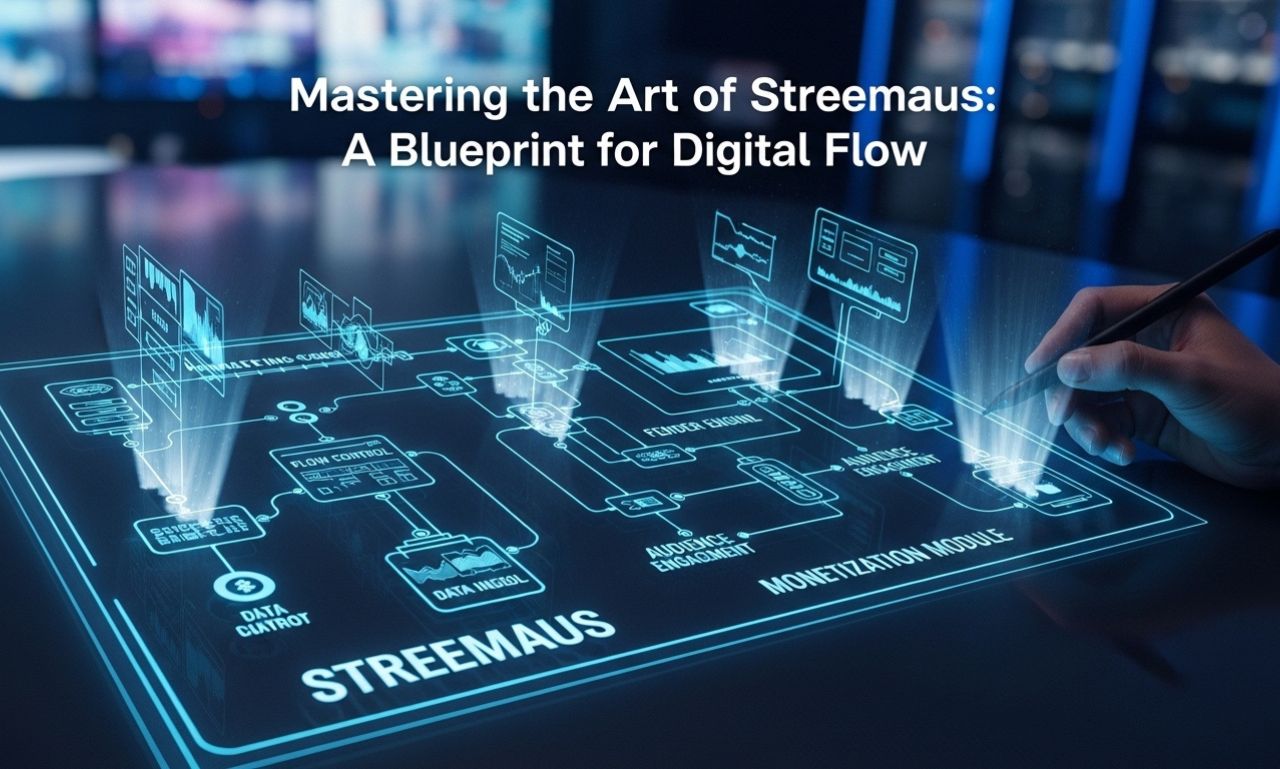
In the modern era of information overload, the concept of streemaus has emerged as a quiet revolution. While the term may sound unfamiliar to many, its application is deeply rooted in the daily struggle for focus, clarity, and efficient data handling. At its core, streemaus refers to the deliberate practice of curating, sequencing, and managing digital streams—whether they are social media feeds, email notifications, project updates, or real-time analytics—to minimize cognitive friction and maximize actionable output. The rise of streemaus as a discipline signals a shift from passive consumption to active orchestration of one’s online environment. In this article, we will dissect the anatomy of streemaus, explore its practical benefits, and provide a step-by-step guide to implementing its principles without succumbing to the very chaos it seeks to eliminate.
What Exactly Is Streemaus? Defining the Unfamiliar Term
To understand streemaus, one must first abandon the assumption that digital streams are inherently uncontrollable. The word streemaus combines the notion of a “stream” (a continuous flow of data) with the suffix “-maus” (derived from the Old English mūs, implying a quiet, persistent agent that navigates complex spaces). Thus, streemaus is the practice of becoming that agent: a silent, efficient navigator of your personal data rivers. Unlike generic time-management systems, streemaus focuses specifically on the texture of your digital intake. It asks not just “What are you doing?” but “What is flowing past you, and how are you interacting with each droplet?” A true streemaus practitioner does not merely react to notifications; they design the channels, set the velocity, and decide what gets filtered out before it ever demands attention. This proactive stance is what separates streemaus from simple decluttering.
The Core Principles of Streemaus: Stream Ecology for the Mind
Implementing streemaus requires understanding three foundational pillars. First is segmentation: breaking a single overwhelming stream (like a Slack channel or Twitter feed) into thematic substreams. For example, a streemaus approach to email would involve separate filtered views for urgent client communication, internal team updates, and newsletters—each accessed at different times of day. Second is velocity control: the ability to speed up or slow down a stream based on current mental bandwidth. A mature streemaus setup might throttle real-time stock tickers during deep work sessions and accelerate them only during designated review periods. Third is termination: the courage to shut off a stream entirely when its signal-to-noise ratio falls below a sustainable threshold. Without termination, streemaus becomes just another layer of clutter. These three principles work together to transform a chaotic digital deluge into a manageable, even pleasant, current.
Why Streemaus Matters: The Hidden Cost of Random Access
Most professionals operate under what could be called the “random access” model of digital hygiene. They check their phone when it buzzes, glance at email when a tab turns red, and jump into chat threads at random intervals. This approach is the antithesis of streemaus. Studies on task-switching have shown that each random interruption can cost up to 23 minutes to regain deep focus. Streemaus directly counters this by replacing random access with scheduled, batch-processed stream engagement. Imagine starting your day not by opening six apps simultaneously, but by activating a single streemaus dashboard that shows you three high-priority streams: project deadlines, direct messages from your manager, and system alerts. Everything else is queued for later. The result is a measurable reduction in anxiety, a lower error rate, and a surprising increase in available creative energy. That is the hidden value of streemaus—not more work, but better quality of attention.
Practical Tools to Build Your Streemaus Workflow
You do not need exotic software to practice streemaus; most existing tools can be reconfigured. Begin with your browser. Use tab grouping and suspension extensions to treat each window as a separate stree-maus channel. For instance, group all research tabs under one channel, communication tools under another, and entertainment under a third that remains collapsed until lunch. Next, turn to your notification settings. A true stree-maus environment has no pop-ups, no badges, and no sounds except for pre-authorized emergency channels. On your phone, use focus modes to create daily stree-maus schedules: one for morning deep work (only calendar and task manager), one for afternoon collaboration (Slack and email allowed), and one for evening review (RSS feeds and read-later apps). Finally, adopt a central aggregator like a read-it-later service or a dashboard tool (e.g., Raindrop, Mem, or even a well-organized Trello board) to serve as the single point of entry for all your stree-maus streams. This aggregator becomes your control room.
Common Streemaus Pitfalls and How to Avoid Them
Even with the best intentions, streemaus can fail. The most common mistake is over-engineering: creating so many filtered substreams that managing the system becomes a full-time job. Remember, stree-maus is meant to reduce complexity, not multiply it. Start with only three primary streams and add more only after two weeks of stability. Another pitfall is perfectionism—waiting for the ideal setup before beginning. A functional stree-maus practice is iterative; you can start today by closing five browser tabs and disabling two notification categories. The third error is isolation: practicing stree-maus alone while your team or family operates chaotically. Share your streemaus methods with close collaborators. Explain that you check messages on the hour, not on the second. Most reasonable people will adapt, and some may even adopt streemaus themselves, creating a shared culture of respectful digital flow.
Measuring Success in Streemaus: Metrics That Matter
How do you know if your stree-maus system is working? Do not rely on vague feelings. Track three concrete metrics over a 30-day period. First, stream entry count: how many times per day do you consciously open a new digital stream (app, feed, inbox)? A successful stree-maus implementation should reduce this number by at least 40%. Second, resumption time: after an interruption, how many seconds does it take you to return to your primary task? With stree-maus, that interval should shrink from minutes to under fifteen seconds. Third, end-of-day residue: the number of unprocessed but non-urgent items left in your streams. A healthy stree-maus practice keeps this below five items. Track these numbers in a simple log or a note-taking app. You will likely see improvement within the first week, and profound change by the end of the month.
The Future of Streemaus in an AI-Driven World
As artificial intelligence begins to mediate more of our digital interactions, the principles of streemaus will become even more critical. Future AI assistants could act as intelligent streemaus agents—pre-filtering emails, summarizing long threads, and even predicting which streams you will need at different times of day. However, the human element of streemaus will remain irreplaceable. Only you know the subtle differences between a useful notification and a distracting one. Only you can decide when a stream has outlived its purpose. Therefore, streemaus is not a static technique but an evolving philosophy. It adapts to new tools while preserving the core insight: that you are not at the mercy of your digital streams. With practice, intention, and the quiet persistence of a mouse navigating a vast network, you can become the master of your own flow. Start your streemaus journey today—one stream at a time.