

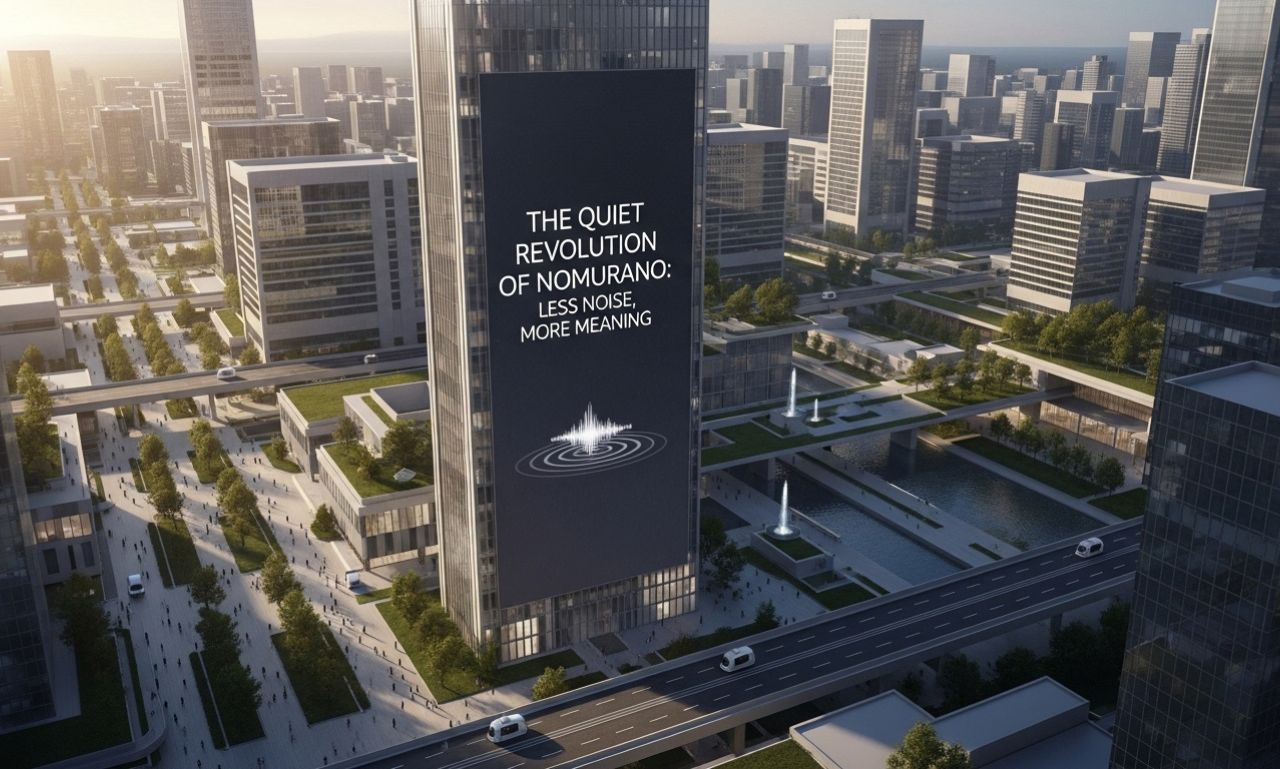
In an age of overwhelming consumerism and digital clutter, a subtle yet powerful movement has emerged: nomurano. Unlike fleeting lifestyle fads, nomurano is not about deprivation but intentionality—a deliberate shift away from the “more is better” mentality toward a state of curated calm. The term, though new to many, encapsulates a philosophy that blends minimalism with functionality, urging us to strip away the non-essential without sacrificing beauty or purpose. To embrace nomurano is to ask a simple question before every acquisition or commitment: Does this add genuine value to my life? This article unpacks the origins, principles, and practical applications of nomurano, offering a roadmap for anyone seeking clarity in a chaotic world.
Understanding the Essence of Nomurano
At its core, nomurano rejects the notion that abundance equals happiness. The word itself derives from a fusion of “no” and “murano”—the latter referencing the famous Italian island known for ornate, intricate glasswork. Where Murano glass celebrates complexity and embellishment, nomurano celebrates restraint. It is the conscious choice of a clean line over a convoluted curve, of silence over noise. However, nomurano is not austerity; it is precision. Think of a Japanese rock garden versus a Baroque cathedral: both are beautiful, but nomurano leans toward the garden’s sparse elegance. By focusing on what remains rather than what is removed, practitioners of nomurano find that less truly becomes more.
Why Nomurano Matters in Today’s World
The modern environment bombards us with options—thousands of streaming shows, endless social media feeds, and closets stuffed with rarely worn clothes. This surfeit leads to decision fatigue, anxiety, and a nagging sense of dissatisfaction. Nomurano offers an antidote. Studies in environmental psychology show that visually complex spaces increase cortisol levels, while orderly, simplified environments promote focus and calm. Nomurano applies this insight beyond physical spaces to digital lives, schedules, and even relationships. When you adopt nomurano, you reclaim agency. You stop being a passive recipient of the world’s excess and become an active curator of your own experience.
Core Principles of Nomurano Practice
To live by nomurano is to internalize three guiding pillars: intentionality, functionality, and serenity. Each principle interweaves with the next, creating a holistic approach to daily life.
1. Intentionality: The Heart of Nomurano
Every object, app, or commitment in a nomu-rano-aligned life must earn its place. This means pausing before purchases, unsubscribing from newsletters that don’t serve you, and declining invitations out of obligation rather than desire. Nomu-rano asks: “Why this, and why now?” For example, a nomurano wardrobe contains only clothes that fit perfectly, feel good, and suit your actual lifestyle—not aspirational outfits for a life you don’t lead. Digital nomu-rano involves deleting unused apps, turning off non-critical notifications, and maintaining a single, well-organized cloud storage system. Intentionality transforms mindless consumption into mindful choice.
2. Functionality: Beauty with Purpose
Minimalism sometimes errs toward cold sterility. Nomurano avoids this by insisting that everything functional can also be pleasing. A nomurano kitchen has high-quality tools that are used weekly, stored visibly because they are also beautiful. A nomu-rano workspace features only what aids productivity—a comfortable chair, a good lamp, a single notebook—but these items are chosen for tactile and visual satisfaction. Functionality under nomu-rano does not mean ugly; it means no ornament for ornament’s sake. William Morris’s famous dictum—“Have nothing in your house that you do not know to be useful or believe to be beautiful”—is a perfect expression of nomu-rano.
3. Serenity: The Ultimate Goal of Nomurano
All roads in nomu-rano lead to inner peace. When your environment is curated, your mind follows. Clutter—physical, digital, or social—fragments attention. Nomurano restores wholeness. Morning routines become simpler: you are not hunting for keys or scrolling through 200 unread emails. Evenings become restorative: your living space breathes. Serenity under nomu-rano is not passive; it is the active reward of disciplined subtraction. Many who practice nomu-rano report better sleep, lower stress, and more creative energy because their cognitive load has lightened.
Practical Steps to Implement Nomurano Today
Theory is valuable, but nomu-rano shines in application. Here is a week-by-week guide to infusing nomu-rano into your life without overwhelm.
Week 1: Physical Nomurano – The 30-Day Touch Rule
Start with one room. Take every item you haven’t used in 30 days and place it in a box. Seal the box and store it. If you don’t open it for another 30 days, donate or discard it guilt-free. This is nomu-rano in action: not radical purging overnight, but gentle, evidence-based removal. Pay special attention to surfaces—counters, desks, nightstands. A nomu-rano surface holds only three things maximum: a lamp, a plant, and one personal object. You will be shocked at how spacious a table feels when it follows this rule.
Week 2: Digital Nomurano – The Notification Fast
Your phone is a nomu-rano frontier. Go to settings and disable every non-essential notification. Leave only calls, messages from key contacts, and calendar alerts. Next, delete any app you have not opened in the past two weeks. Unsubscribe from 10 email lists per day. Finally, organize your remaining apps into one home screen folder labeled “nomurano”—only tools you actually need. You will notice a drop in phantom phone checks. Digital nomu-rano frees hours each week.
Week 3: Social Nomurano – Curated Connections
Nomu-rano applies to relationships too. List the people you’ve interacted with in the last month. Who energizes you? Who drains you? Without drama, reduce time with energy-draining individuals. Say no to three social obligations that feel like chores. Schedule one deep, focused hour with a person who matters. Social nomu-rano is not about isolation; it is about quality over quantity. You will find that two hours of genuine connection beat ten hours of small talk.
Week 4: Temporal Nomurano – The Single-Tasking Pledge
The final frontier is time. Commit to single-tasking for one week: no phone during meals, no email while on calls, no TV as background noise. Block 90-minute nomu-rano sessions in your calendar for deep work, followed by 30 minutes of true rest (no screens). You will likely accomplish more in four focused hours than in eight fragmented ones. Temporal nomu-rano reveals that busyness is not the same as effectiveness.
Overcoming Common Nomurano Challenges
Adopting nomu-rano is not always easy. The first obstacle is emotional attachment: “But this was a gift!” Nomu-rano counters that gratitude is not storage. Thank the giver, then release the object. Second is fear of needing something later: statistically, 80% of what you keep “just in case” is never used. Third is social pressure: others may call you extreme. Nomurano teaches that their opinions are not your responsibility. Start small, be patient, and remember that nomu-rano is a practice, not a perfection.
The Lasting Impact of Nomurano
Those who embrace nomurano describe a paradoxical expansion. By having less, they experience more: more time, more peace, more mental bandwidth for creativity and loved ones. Nomurano is not about emptiness; it is about making room. Room for what truly matters. In a culture that profits from your distraction, nomurano is a quiet act of rebellion. It is the choice to live deliberately, to own your possessions rather than being owned by them, and to find abundance in subtraction. Whether you redesign a single drawer or an entire lifestyle, the principles of nomurano scale to any level. The question is not whether you can afford to try nomurano, but whether you can afford not to. Begin today. Choose one drawer, one app, one commitment—and let nomurano show you how light life can feel.